AMERICA 250: Retired local teachers look at scope of nation’s history
Lowery pushed his students to seek the full story from our past
By DONNA THORNTON, Editor
Retired teacher John Lowery ran into a former student some time ago and they started talking about current life in America.
Lowery said he was kind of surprised that the student recalled lessons from Lowery’s classroom and concluded the nation has been through chaotic times before.
“It’s a circus,” Lowery said, “but it’s always been from the get-go. I think part of teaching history is taking the fear out of everything.” A lot of students have anxiety about what’s going on, he said, and studying those tumultuous times of the past can help to assure them that things will be all right.
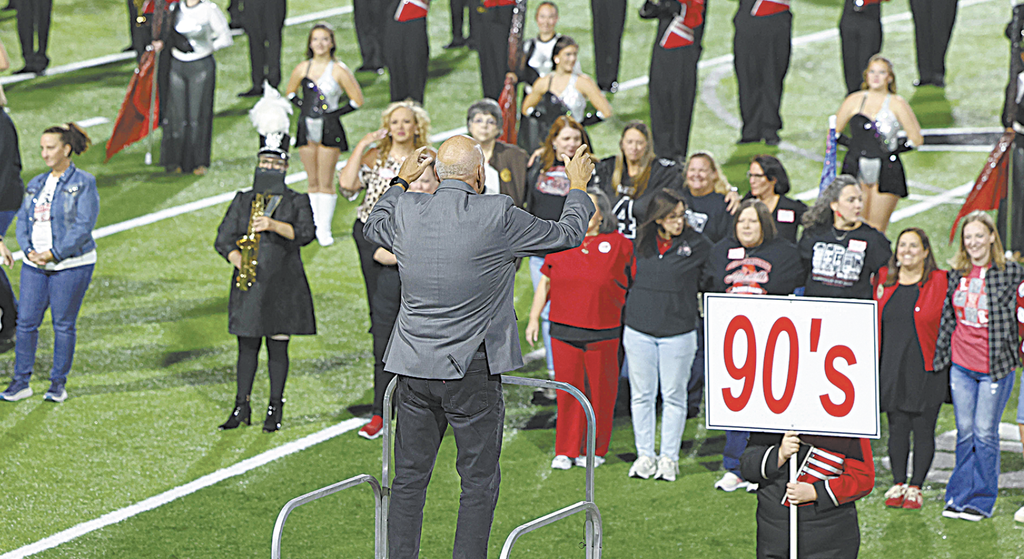
Lowery spent 37 years in the classroom, some of the most memorable of those years teaching American history at Boaz High School. Lowery created a unique experience for students, bringing in artifacts and documents to create a kind of colonial classroom giving students a hands-on connection to the lessons he taught.
Asking Lowery what lessons from American history he believes are most important to teach students today, he said the most important thing may be teaching students to learn from more than one source or one point of view on topics past and present.
In his classroom, he didn’t use a textbook, using actual documents and actual legislation to teach students rather than relying on a textbook interpretation, and he tried to throw in every viewpoint he could into the lessons.
“They knew where I stood on things,” Lowery said of his classes, but they heard other sides of the issues discussed.
His goal was to teach students they should not depend on one source, that they should seek out resources. “That’s hard in this day, because there’s so much – 250 years of resources,” he said.
It’s hard to find good textbooks, Lowery believes, because “it depends on who’s paying the publisher.” He recalled a case from Texas, where a Black woman sued over a Common Core history textbook. He said the text described slaves as underpaid migrant workers.
That might be technically true, he said, “but it completely misses what it was.”
It’s not just a textbook issue. Lowery said consider Paul Revere’s role in history. “We know about Paul Revere because a few years later, a guy wrote a poem.” The poem doesn’t mention that there were other people involved in the ride, that Revere got caught and told captors what he was doing, or that the other people finished the task.
During the elementary years, he said, kids learn about Pilgrims, Indians, and turkey, then in high school, must be taught it was not that simple a story.
He found kids love to get their hands on artifacts, to learn what peoples’ lives were really like: what they ate, what kind of clothes they wore and how such things influenced architecture and furniture design (to accommodate the enormous hoop-skirts women wore). He worked to bring physical connections to the content – a lemon tree to teach about early exploration and issues with scurvy or blue and white china being an early reason for exploration.
Lowery said he thinks students should be cautioned not to be educated by the media. There may be a History Channel, he said, but it is there to make money, more than to teach history. It’s programming is designed to attract an audience, and that does not always make for the vetted lessons about the past.
“I think it’s very important that we don’t try to romanticize history,” Lowery said, “that we teach the truth.”
As he sees that, it means looking at three forces that have driven history: Money, power and religion.
Everything in our history, he said, can be traced back to one or the other. If two are involved, he said, things can get intense. If all three are involved, “you’re looking at global change.”
Lowery said students tended to be surprised when he tied historical events to those factors, from the start of the nation. Even the American Revolution, he said, stemmed from financial considerations.
“We didn’t want to pay any more than we had to,” he said to the British government.
From the formation of the nation – the events the U.S. is celebrating this year – Lowery said teaching the Constitution is vital – “what’s actually in it and what is implied and what can be reasonably inferred,” along with the Bill of Rights and the amendments.
Students need to be taught a functional understanding of terms to evaluate history and current events; they need to know what validity and reliability are, and to understand motivation, primary sources vs. secondary sources, inferences, propaganda, conspiracy and “band-wagon” ideology, he said.
Lowery is concerned at a modern trend, the idea that we don’t need to look at history. He noted the adage, “those who don’t study history are condemned to repeat it.”
Even if history doesn’t repeat, its ripples are felt across time, continents, and oceans.
The first lesson he would teach each year, he said, was the story of Abraham, Sarah and Haggar. The Biblical story is religion, Lowery said. “But it doesn’t matter if you believe it or not. Those three people and what they did caused world conflict.
“Your personal beliefs don’t matter. It doesn’t matter if you don’t believe the story,” he said. “You are affected by it.”
Blanks thinks students should learn about the founding documents
By DONNA THORNTON, Editor
From a global perspective, the United States’ history is relatively young.
Still, that’s a lot of history and a lot of lessons that could and probably should inform the policies and perspectives of Americans today.
What lessons are most vital in America’s history? We asked retired Albertville High School American history teacher Jerry Blanks what lessons he believes students today need to learn.
“This year especially, I think we would teach about the American Revolution and about the Declaration of Independence, and especially, the Constitution.
“That Constitution is the most important document. It is a wonderful document and we’ve used it now almost as long as we’ve had our independence,” Blanks said, noting the document came a few years after the U.S. declared its independence.
The U.S. Constitution, he said, sets out the rules and guidelines that established the government of the nation, along with the way the document can be amended if needed. “I think that Constitution is being ignored right now by a lot of people in government,” he added. Because of political parties, he said, he does not much is being done about it.
Blanks said the Constitution’s guidelines should be taught to modern-day students. There are rules in the Constitution, he said, “not only for the president and the executive branch but also a lot of rules for senators and representatives, and even rules for governors and states.
“We have things in the Constitution that if the governor of Alabama does stuff, it would be a violation,” he said.
“That would probably be difficult to teach,” Blanks said in the current political atmosphere. “That would get me off on political issues and things that would be good, particularly in Alabama.”
Blanks recalls when students were required to study civics for a semester in ninth grade, with Alabama history for the other semester. By the time he retired 25 years ago, that was not required any more.
Blanks started teaching history before he’d experienced much of it. He recalled graduating college at 21, finishing in three years. “I finished at the University of Alabama on a Wednesday, had a faculty meeting the next day at Albertville and the next day I started teaching.” He taught some math classes (‘I wondered what am I doing?’) before getting the assignment he wanted — teaching U.S. history in his third year.
He taught U.S. history and world history, as well as civics and government over more than 30 years.
For someone who taught the Constitution for years, “it bothers me a lot … when I see people in government, some of the officials, just breaking the law completely and nothing is done about it,” he said. “It amazes me.”
There used to be restriction on the dollar-amount of donations, Blanks said, but those rules have been changed. Presidents and their families were not supposed to make money off their presidency, he said, but it happens now.
“Our country was set up for everybody, not just the rich,” he said. “If you wanted to rich, you wouldn’t have had a rebellion because the wealthy people and the King of England worked together. It was the poor people and average people who didn’t have any rights.
“When we declared our independence and set up this new government everybody is supposed to be equal – even though we had a long way to go,” he said, adding the 16th amendment to do away with slavery and the 22nd amendment to give women the right to vote.
The Constitution was changed through the years in the right direction, Blanks said. “We had a long way to go but it was a start. We were saying that people shouldn’t have to be rich to vote.” Still, for a long-time people had to own property to vote.
“If you’re a U.S. citizen you should be able to vote and your vote should have the same value as the person who has a billion dollars,” Blanks said.
“We’re as far away from our Constitution and our democracy as we’ve ever been,” he believes. “We’re headed in the wrong direction. I’m a pessimist, I guess.”
More about government should be taught in schools, he said, including local governments – how the city and county governments work, and to concentrate especially on the state, how the governor is elected.
As far as American history, it should begin with the American Revolution – though maybe with a different emphasis, Blanks said.
“I know the wars – I used to teach every battle in the Civil War. I visited those battlefields and had brochures,” he said. “But now, I wouldn’t think you would cover it very much. You’d cover the causes of the war and the consequences of the war more than the battles.
“My students used to be shocked when I would tell them that all the wars we’ve ever had start because of economic reasons, not political. A lot of people are shocked when I say that. Like the American Revolution got started because of the tea tax and the Boston Tea Party.”
“That’s what started that one, he said. “And if you go on up to the Civil War. People say it was fought to free the slaves.” Blanks said there were economic factors that drove the nation to war then, too.
“It was fought because the North was developing industry and manufacturing, and the South had agriculture and they disagreed completely on taxes and tariffs on foreign countries,” he explained.
In the southern states, poorer people living in more rural areas didn’t buy much of anything, Blanks said, instead living more on what they produced. “But wealthier people, they bought nearly everything they bought from England or Europe. They didn’t want any tariffs on those countries.”
As the northern states developed industries, they wanted to have tariffs or taxes on things that were coming into the country that would compete with them, he said.
“It was good that we freed the slaves because of it, but it really started out as an economic dispute between the North and the South,” Blanks believes, and he sees mixed motives in other conflicts the United States has been involved in.
“As you go on up through the wars, a lot people think World War II was caused by the Nazis, and Hitler … but Japan did not bomb Pearl Harbor because of the Nazis. They bombed Pearl Harbor because we had blockaded a lot of places in the Pacific and Japan could not get a lot of the raw material they needed desperately,” he said.
“That’s why they bombed Pearl Harbor,” Blanks said. “Of course they had an agreement – were in alliance with Hitler and Mussolini – and that’s why we got involved in that war, too.”
Today, he said, Japan has a lot of problems with oil. “They are small area with millions of people and they have to import almost everything they use. Even today they have a major problem with oil.”
Going forward in history, Blanks said, “today, why are we involved in Iran? Oh well, it’s because they don’t want (Iran) to build nuclear weapons,” and because of the historic tensions between Muslims and Israelis.
“But when you get down to it, it’s because of oil,” Blanks circumcised. “It’s where a huge amount of oil comes from and it’s shipped through the Strait of Hormuz. I believe if it weren’t for the oil, we wouldn’t be over there. But that’s just my opinion.”
Blanks said if teaching now, he would definitely teach about the economic factors that helped pull the United States into foreign fights. While the political factors are there, he said, he believes it is financial ones that have “sparked” U.S. involvement.
In teaching history, he said, he always liked to draw in current events. “If I were teaching about the Revolutionary War,” Blanks said, “I would definitely talk about Iran, too. And the Constitution. I’d probably get called to the office about that,” he joked.
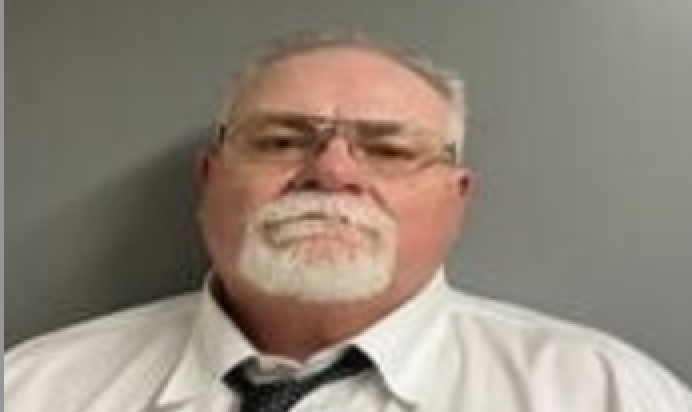
John Lowery (left) and Jerry Blanks.
The Sand Mountain Leader is your trusted source for weekly hometown news, serving the vibrant Sand Mountain community in the heart of Alabama. We're here to bring you the latest stories, events, and happenings, all available conveniently both online and in print.
At The Leader, we believe that community engagement is essential. We want to hear from you, our valued readers! Share your opinions, insights, and thoughts on our articles by adding a comment below each story. Your perspective matters, and your comments contribute to the rich tapestry of discussions in our community.
Together, we can foster meaningful conversations and build a stronger sense of community. Join us in shaping the narrative on Sand Mountain. Your voice is important, and we look forward to reading your comments. Let's make our community news a truly interactive experience!
Have a story idea or a topic you'd like to see covered? Feel free to suggest it in the comments or reach out to our dedicated team. We're here to serve you, and your feedback helps us tailor our content to your interests and needs.